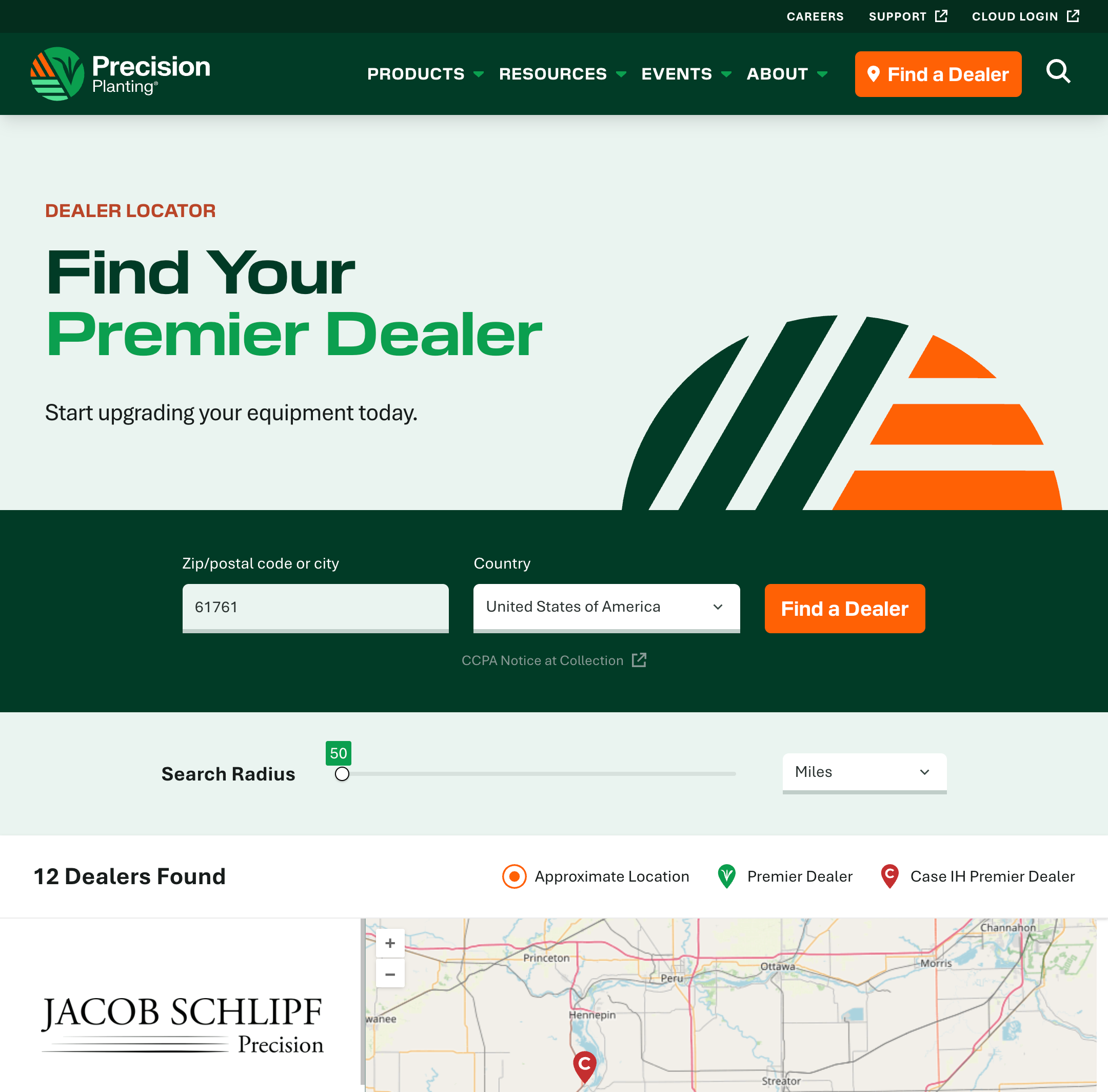
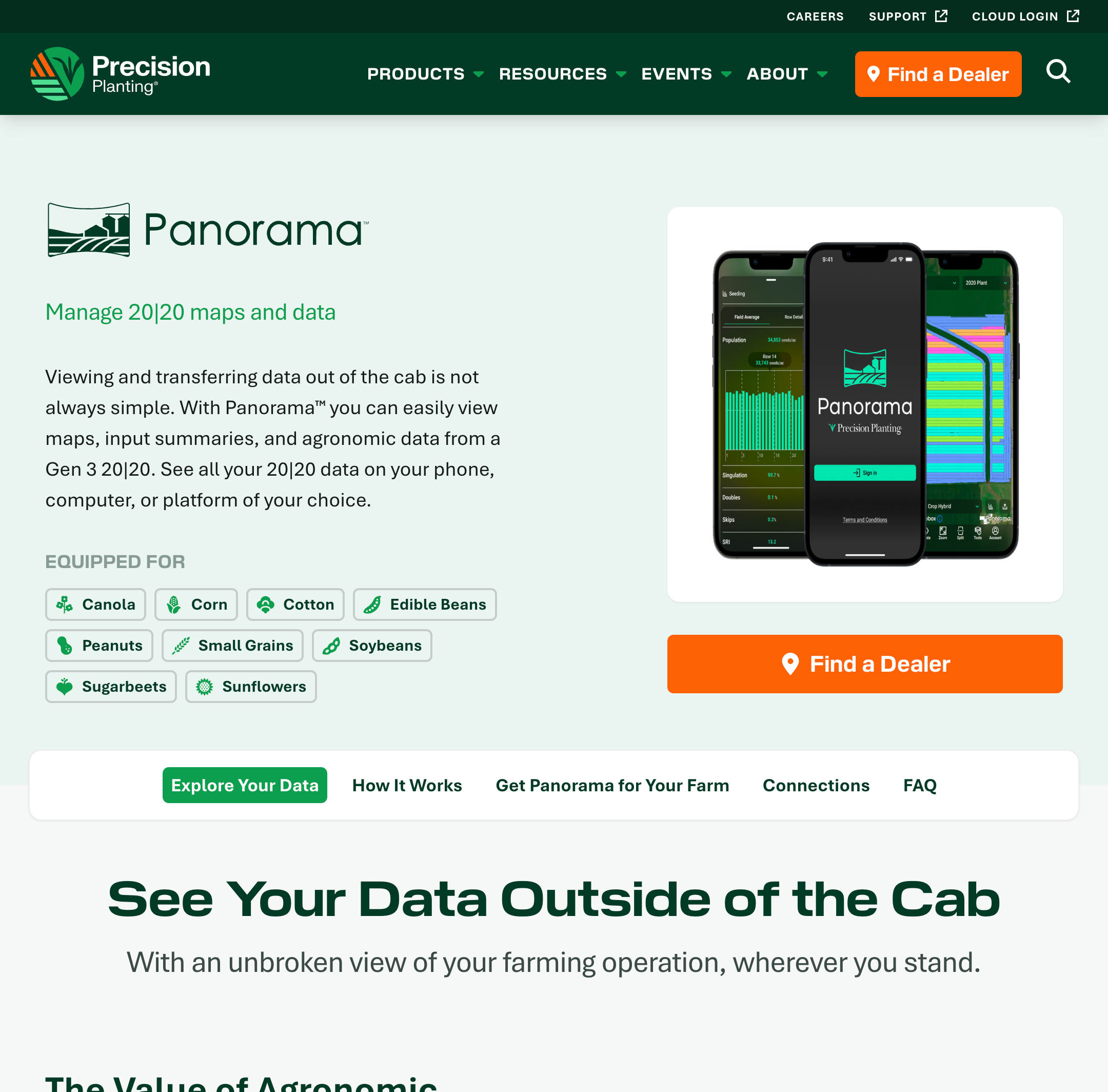
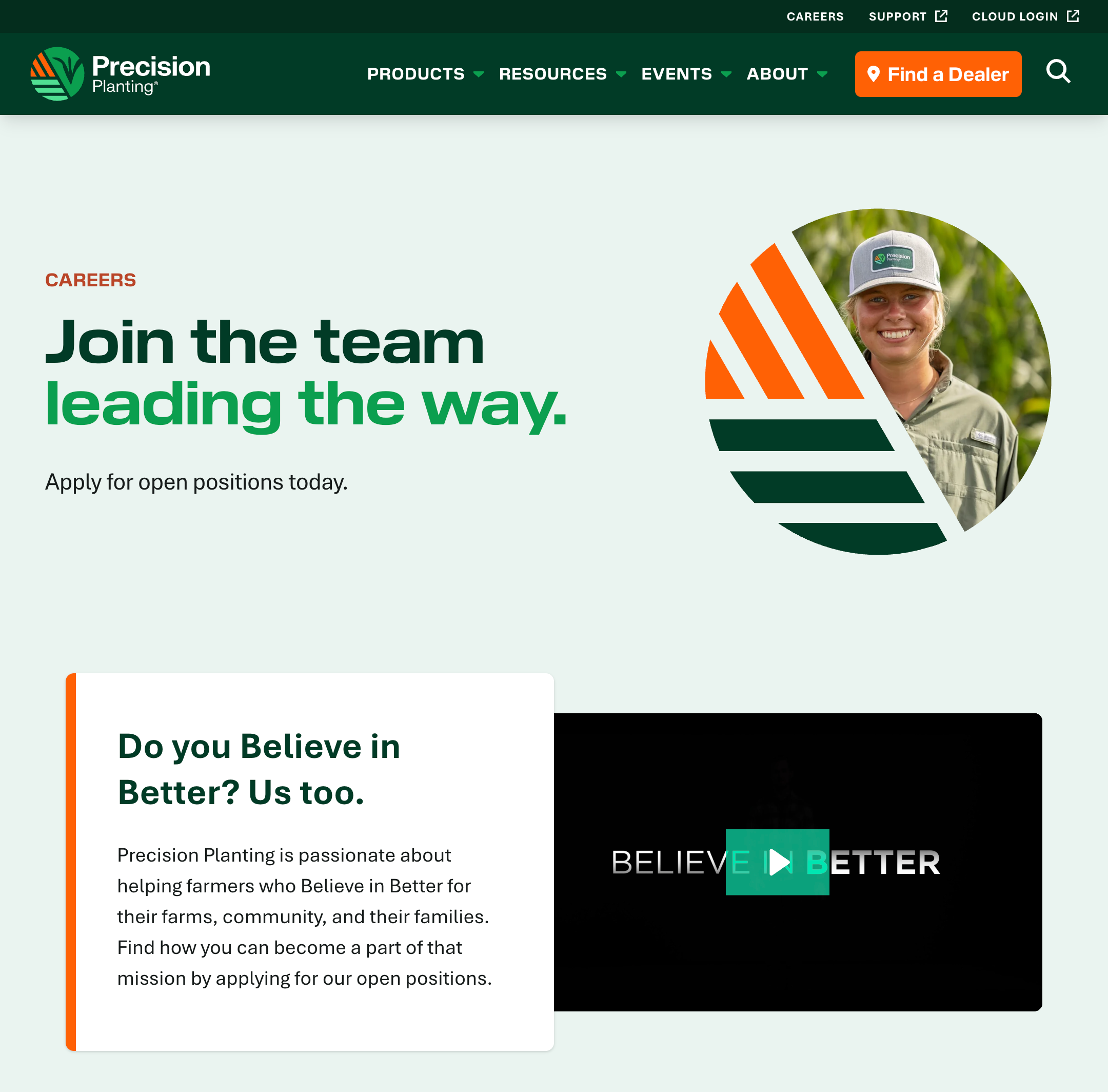
Overview
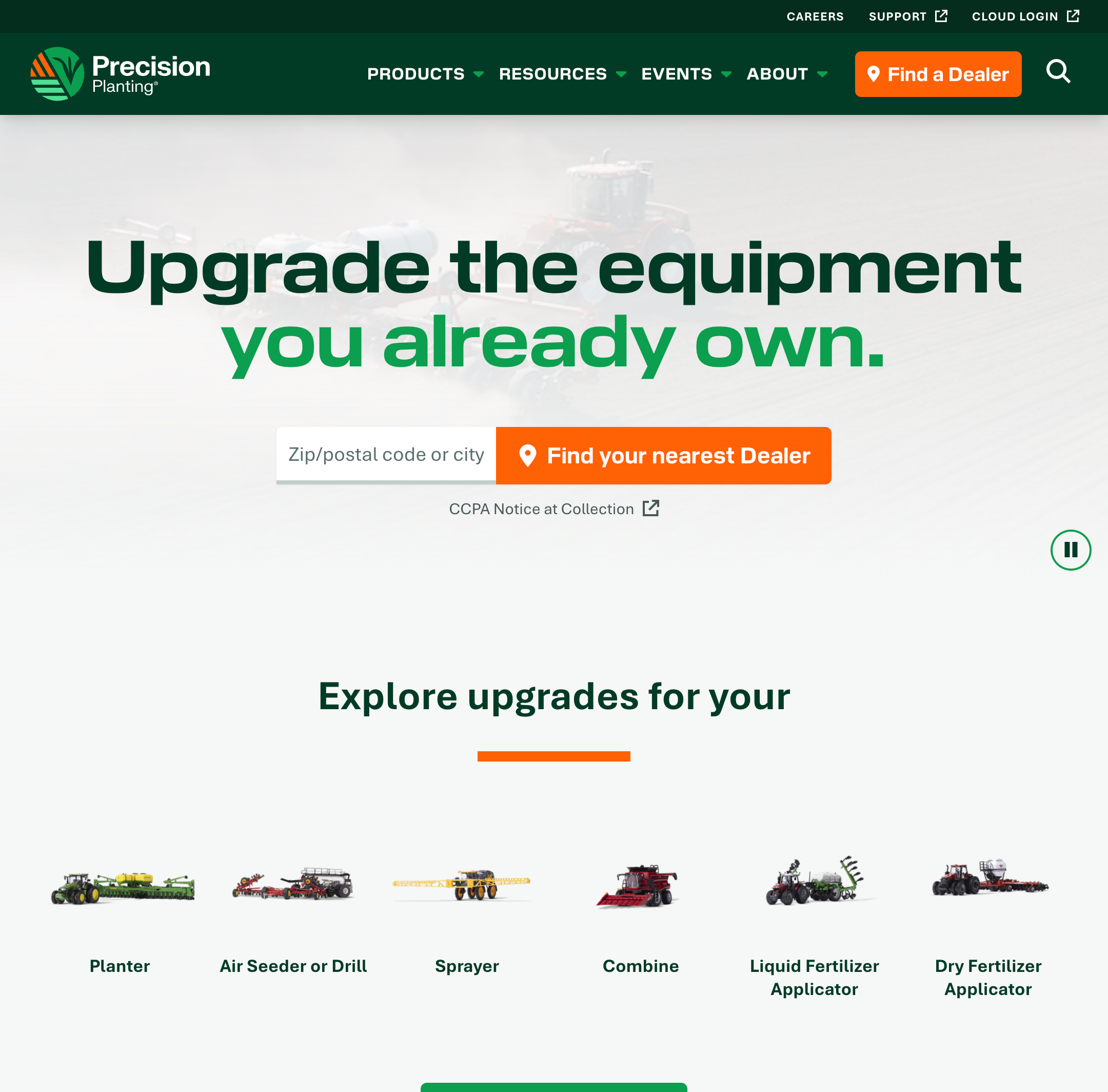
Precision Planting's marketing team had a problem: their website couldn't keep pace with a growing product line or a full brand overhaul. The existing setup was a collection of legacy templates that made adding new products and content slow and painful. They needed a complete rebuild — new architecture, new design system, and a CMS that wouldn't require a developer to update a product page.
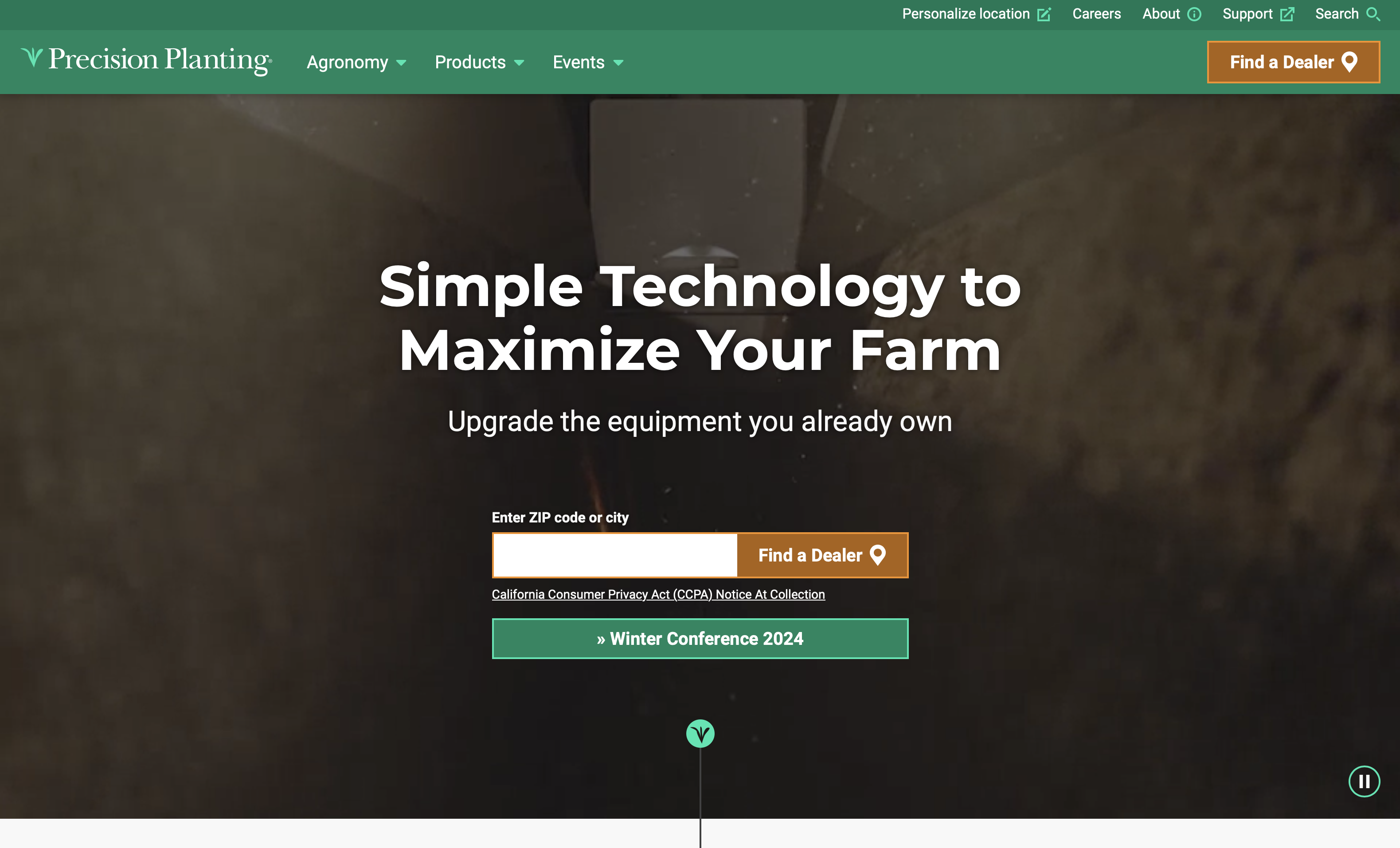
Goal: Build a website that could scale with the brand's product growth, match the new visual identity, and give the marketing team CMS-level control over all content.
My Role
Hired as designer and developer to lead the rebuild from concept to launch:
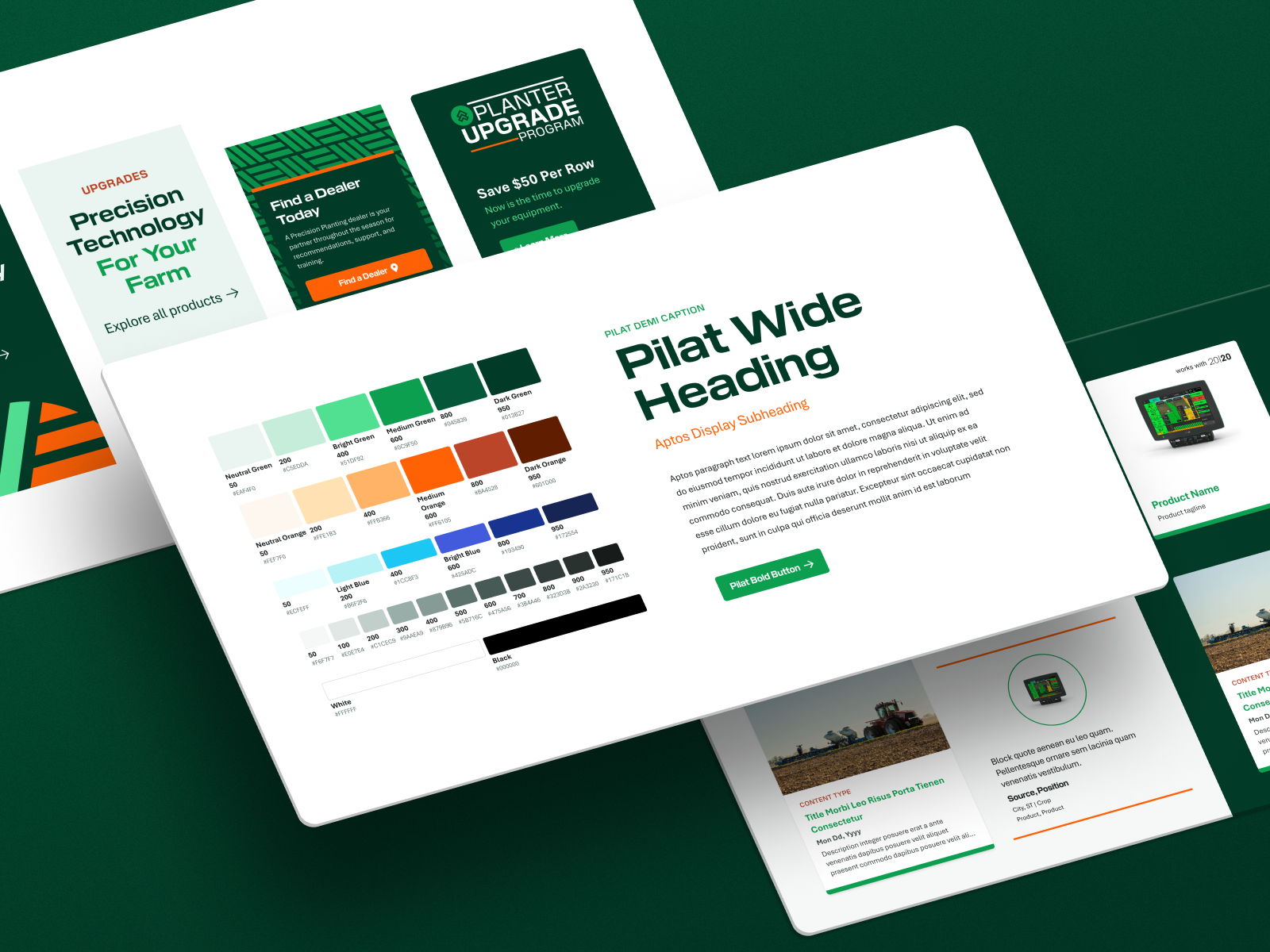
- Design system: full token system (color, type, spacing, motion) in Figma, validated in Storybook
- Component library: built in Next.js + Chakra UI, tested in Storybook with >90% coverage
- CMS migration: moved all content to Kontent.ai headless CMS — new pages went from weeks to hours
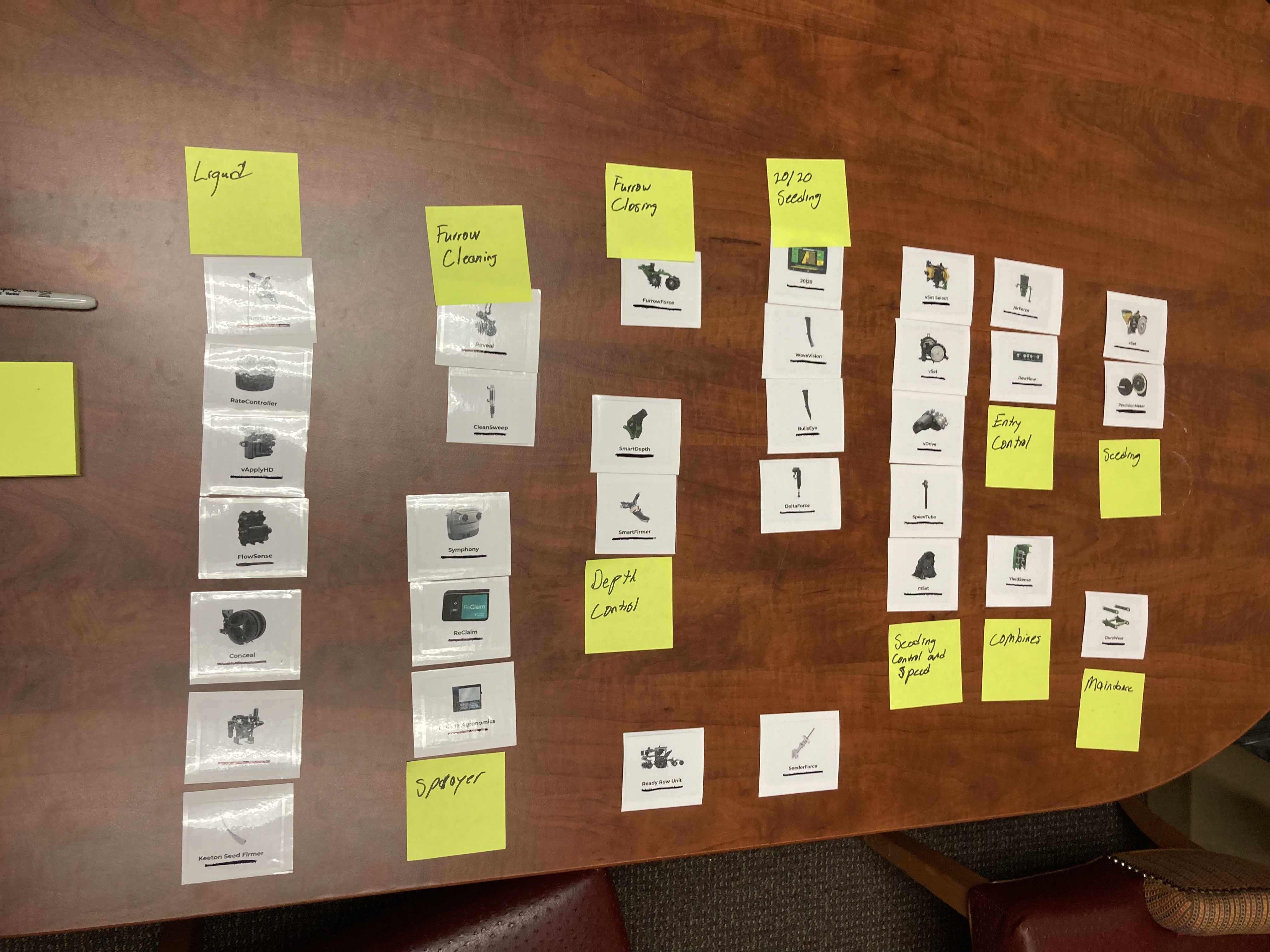
- User research: card sorting with customers and dealers to inform IA and product taxonomy
Process
Architecture decisions
The key call was choosing Next.js + Chakra UI over a CMS-native builder. The marketing team needed design flexibility and the dev team needed a maintainable component model. A headless approach (Next.js frontend + Kontent.ai CMS) gave both: content editors got a clean, structured authoring experience; developers got a typed content model with predictable schema.
User research first
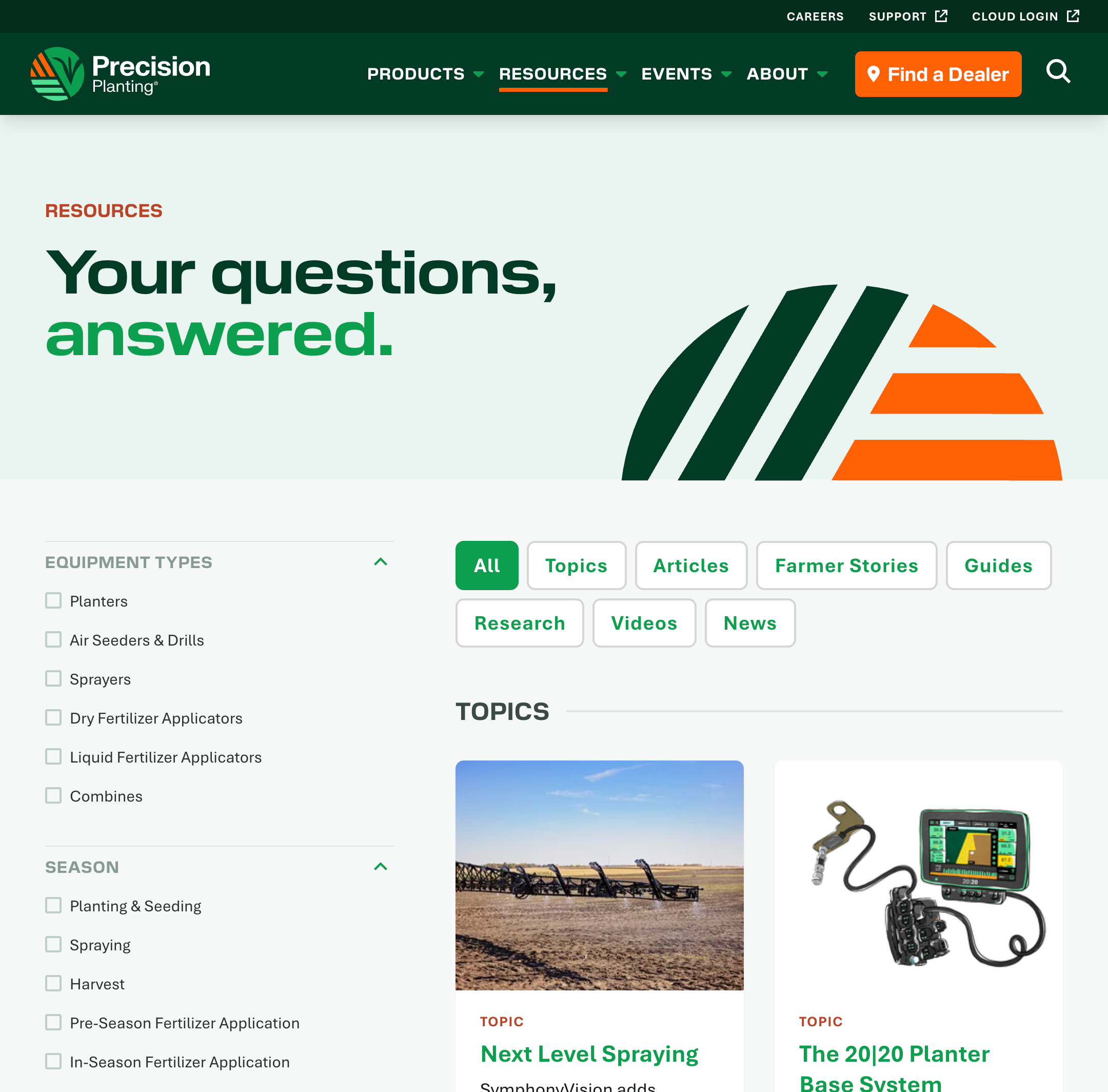
The old IA assumed Precision was a planting-only brand. By 2022, that was no longer true — they covered seeding, soil sampling, and harvest. I ran card sorting sessions with customers and dealers to understand how they mentally grouped products before designing the nav and product taxonomy.
Finding: Users grouped products by equipment compatibility first, then by use case — not by brand sub-line. This drove the entire IA rebuild.
Design system build
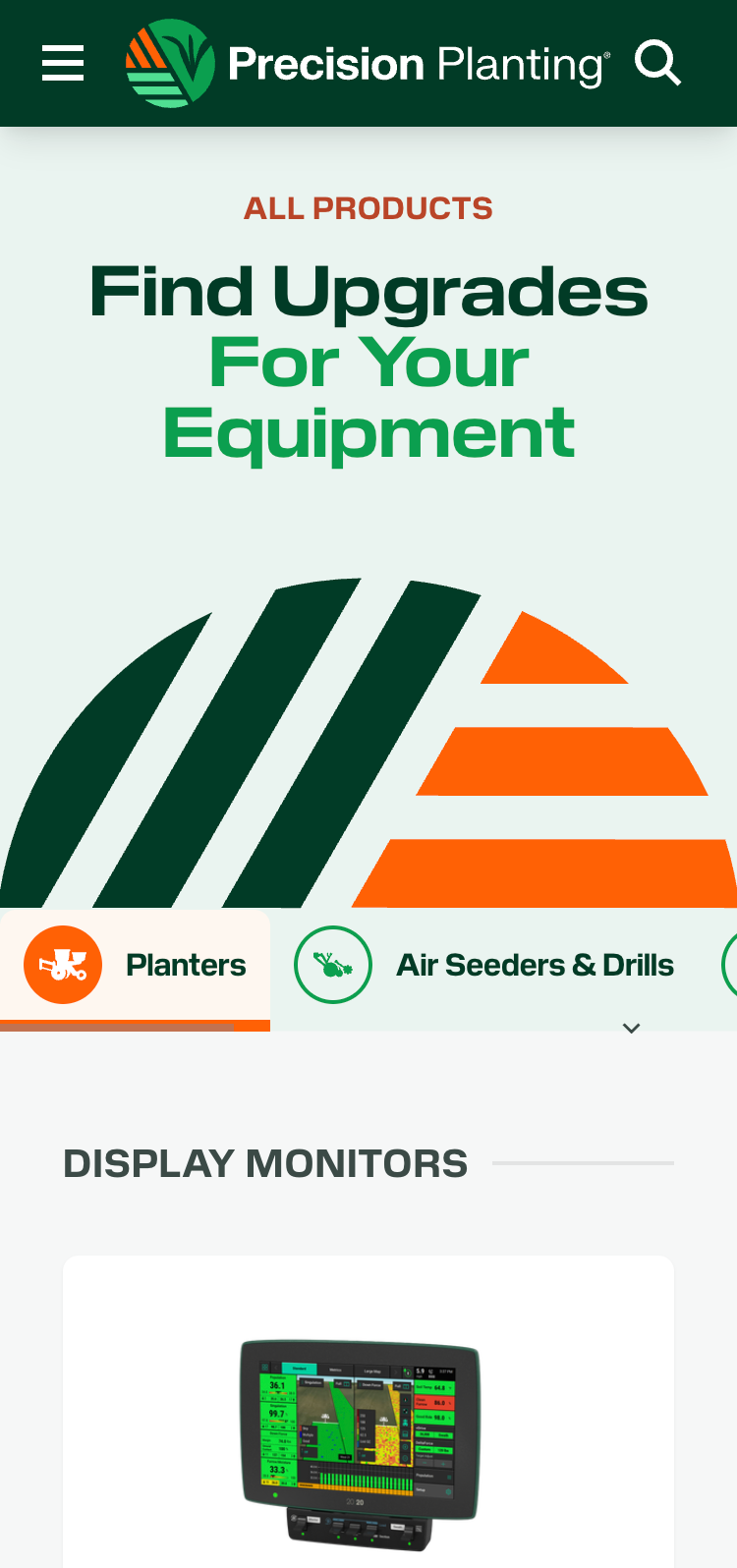
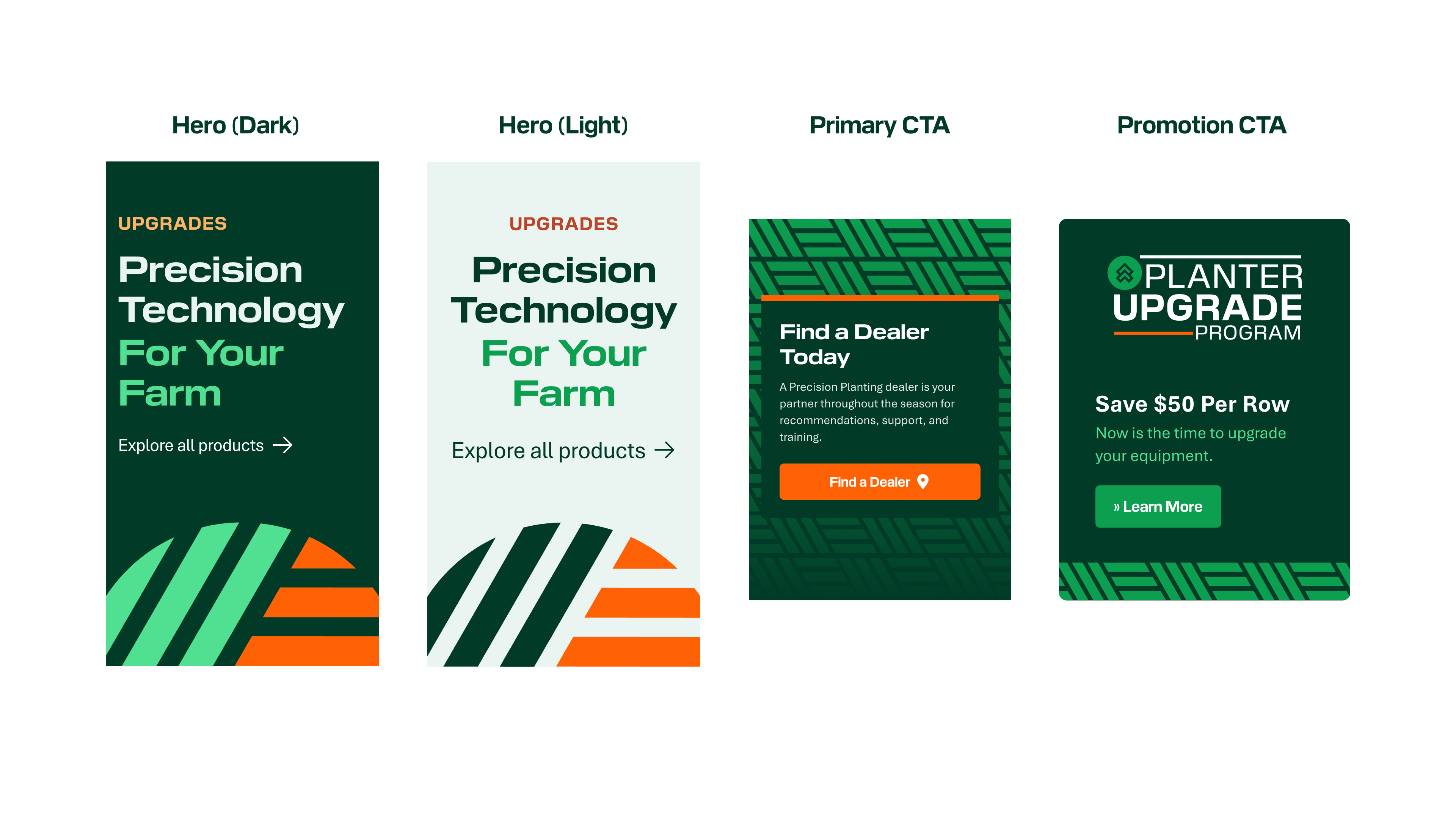
I started with the high-visibility keystone components (hero sections, CTAs, product cards) rather than trying to build a complete atomic system upfront. Getting those right created a strong reference point for every downstream component decision.
Storybook + headless CMS = fast shipping
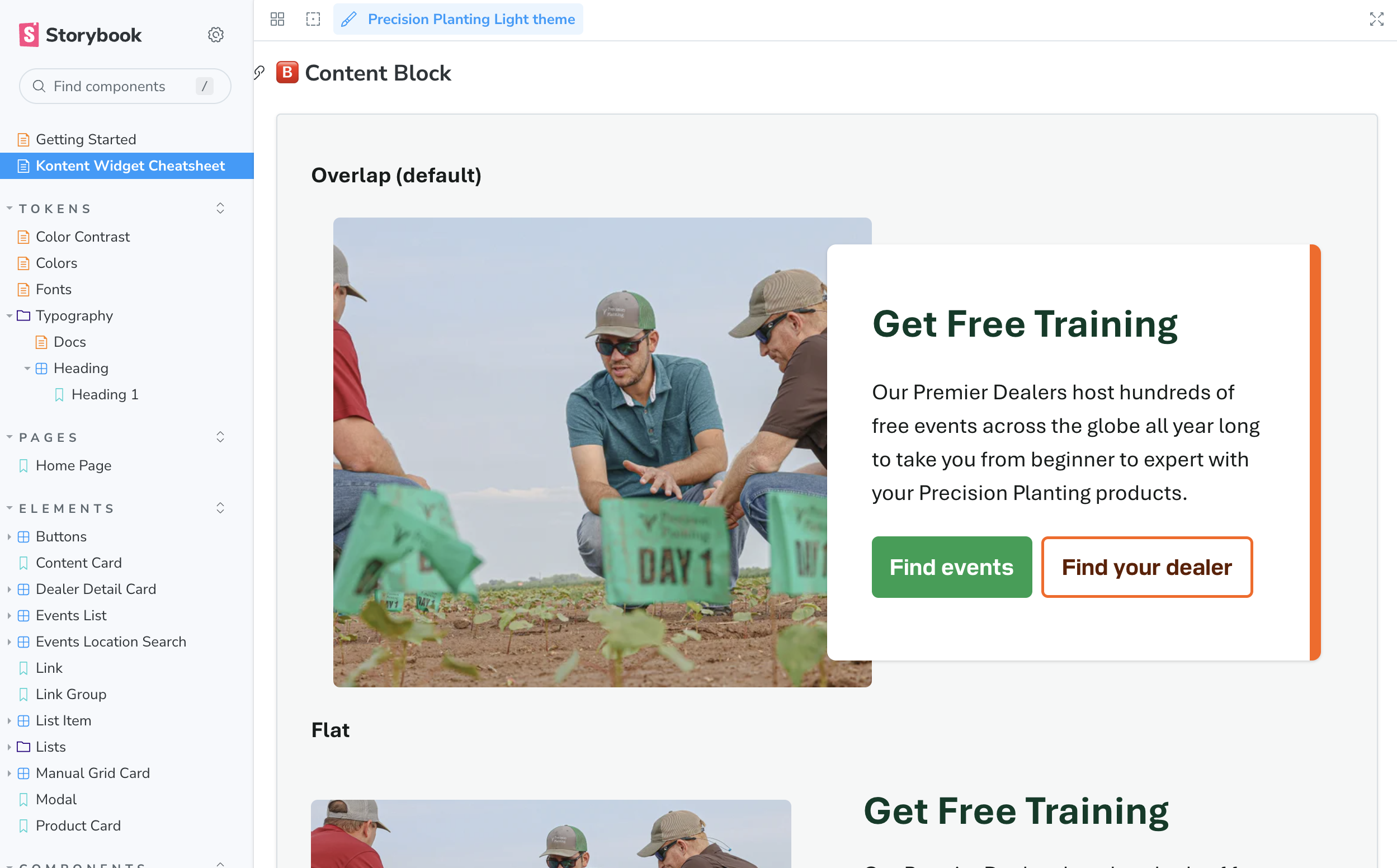
Every component was developed and documented in Storybook before touching any real page. With a typed Kontent.ai content model, adding new widgets to the CMS took minutes instead of sprint cycles.
Outcome
Launched in late 2023. First 90 days:
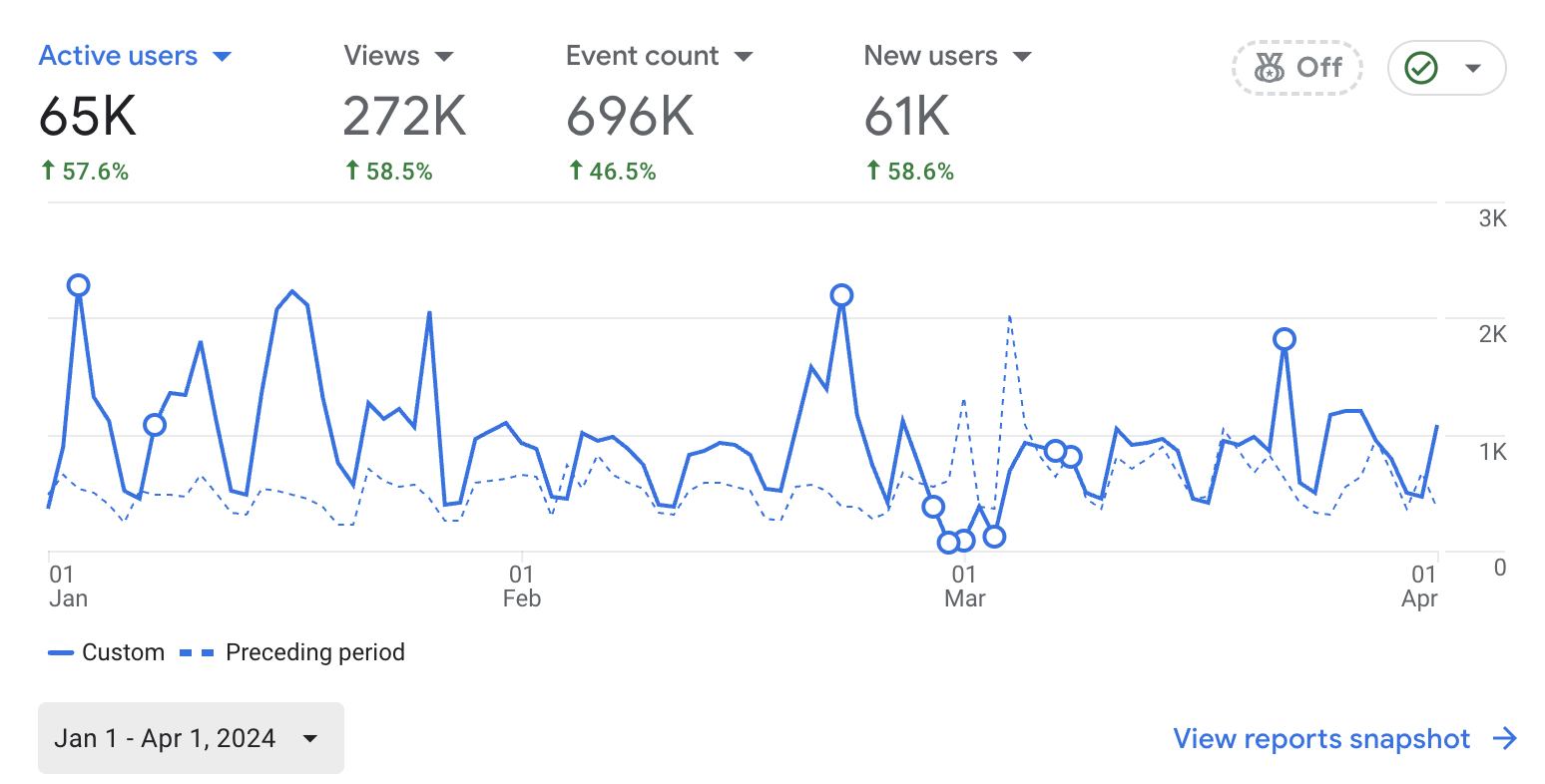
- +58% new users, +57% pageviews
- -9% bounce rate, +46% tracked events (clicks, form submissions)
- Lighthouse 100 across Performance, Accessibility, Best Practices, and SEO
- New content and features shipped in days, not months